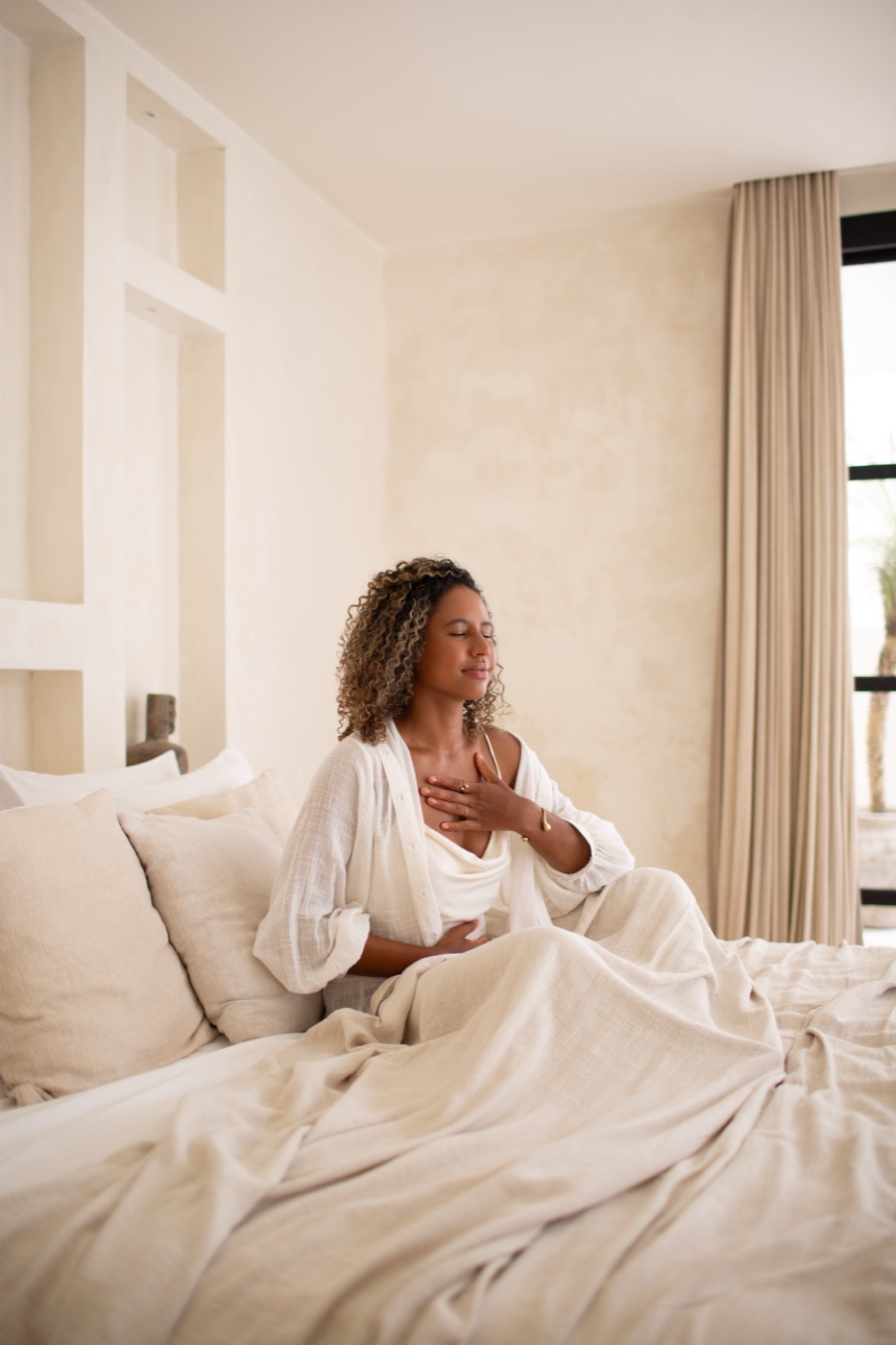
Hey you.
We have made wellbeing into something to chase.
A finish line at the end of the to-do list. A reward for the productive week. A weekend. A retreat. A class. A phase. Something we get to, once we have earned it.
But wellbeing was never meant to be a destination.
It is an architecture. A set of quiet supports.
Architecture is what holds a life upright. Quiet. Structural. Mostly invisible. Sleep. Movement. Nourishment. Stillness. Connection.
Not aspirations. Infrastructure.
When the architecture is arranged well, you do not have to think about it. You wake up rested because the room is dark and the body is held. You move because the day is shaped to invite it. You eat well because the kitchen is set up for you to win. You connect because your week already has the meal, the walk, the call, the human.
This is the difference between motivation and design.
Motivation is finite. Design is permanent
Wendy Wood at Duke, the most cited researcher in the world on habit science, summarised three decades of work in Good Habits, Bad Habits with a number that should change how we think about change.
43% of daily behaviour is habitual. Performed without conscious decision. Conscious choice runs the other 57%, but only when willpower is available, motivation is high, and attention is undivided. In practice, very few moments meet all three.
Which means the central question of wellbeing is not how motivated you are. It is how arranged your environment is.
The most regulated people we know are not the most disciplined. They are the most thoughtfully arranged. Their lives are shaped so that the right choice is also the easiest choice. And the wrong one quietly takes effort.
The Blue Zones, in one line
Dan Buettner's research with National Geographic identified five regions globally where people live measurably longer and healthier lives. Across all five, the common factor is not exceptional discipline. It is environmental architecture. Nine shared characteristics, the “Power 9,” describe an environment that makes movement, social connection, plant-based eating, and stress regulation the default. Not the achievement.
These populations live around ten years longer in good health. Not by trying harder. By living inside arrangements that make trying unnecessary.
There is something to learn from that.
The five domains of architecture
At Studio Wellbeing, we audit and redesign five environments. Each shapes a layer of daily wellbeing.
- Sleep environment. Dark, cool, quiet, screen-free. Phone in another room. A 2021 Sleep Health Journal review found bedroom redesign was the single most effective intervention for chronic mild insomnia, outperforming sleep coaching by a factor of two. Your bedroom decides how you wake up. Treat it like it does.
- Movement environment. Visible equipment beats stored equipment. Walking shoes by the door. A pre-blocked daily window. A route already known. Friction toward movement removed. Friction toward sitting added. The body responds to invitation, not to discipline.
- Food environment. What is at eye level in the fridge wins. What is at eye level in the cupboard wins. Pre-prep wins. The single highest-leverage food intervention is not a meal plan. It is reorganising the kitchen so the food that fuels you is the food that is easiest to reach.
- Information environment. What is on the phone. Who is in the feed. What is on the home screen. The information environment shapes mood, attention, and identity. A quarterly audit of the home screen. Keep only what serves. Move everything else two screens deep. The phone is louder than you think.
- Social environment. Who you share meals with. Who you walk with. Who replies first when you text from a difficult moment. Belonging comes through architecture, not through trying harder. Curate your circle the way you curate your kitchen.
Imagine
Imagine waking up without willpower. Because the room is already dark, cool, quiet, screen-free. The body knows what to do.
Imagine moving without scheduling. Because the shoes are by the door. The window is on the calendar. The route is known.
Imagine eating well without thinking. Because the fridge is organised for you to win. The cupboard is curated. The plate templates are simple.
Imagine connecting without effort. Because the meal is shared. The walk is shared. The space is shared.
This is not deprivation. This is design.
It is the moment the architecture starts holding you, and you can finally rest inside it.
The Studio Wellbeing architecture protocol
For clients moving from individual practices to systemic design, we work in three phases.
- Audit. One week. We map current defaults across the five domains. Not what you say you value. What your current environment is producing. The gap is usually the entire story.
- Redesign. Two to three weeks. We change the inputs, not the willpower. Phone moves out of bedroom. Protein moves to eye level. A walking route gets named and timed. A meal with a specific person becomes a weekly anchor. Each change requires zero motivation once installed.
- 90-day calibration. The architecture is left to do its work. We measure energy, sleep, mood, and recovery. Not adherence. If the architecture is well-designed, adherence is not the right variable. Output is.
The numbers, in summary
43%, share of daily behaviour that is habitual, performed without thought (Wendy Wood, Duke).
90%+ vs 15%, organ donor opt-out rate versus opt-in. Same population. Different architecture (Johnson & Goldstein, Science, 2003).
9, shared environmental characteristics across Blue Zone populations with ten-year longer healthspan (Buettner, National Geographic).
38%, measured improvement in employee wellbeing for organisations that redesigned working defaults (HBR, 2019). 23%, productivity gain in the same population.
30 to 50%, lower heart disease rates in the Italian-American community of Roseto in the 1960s, compared with neighbouring towns. Explained almost entirely by social architecture, not by individual choice.
A house, not a hustle
The most beautiful word in this work is home.
Wellbeing, done right, becomes the way home. Not the way you achieve a better self. The way you settle into the self that has been waiting all along.
A house, not a hustle.
A home you live in, not a goal you keep missing.
Wellbeing is not something you achieve. It is something that grows around you, one quiet support at a time. And once it is in place, it holds you. Every day. Without effort. Without performance. Without permission from the calendar.
To close
Hey you.
Stop chasing wellbeing. Shape it. One pillar at a time. One environment at a time. One quiet design choice at a time.
Nourish. Move. Mind & Soul.
Unleash. Thrive. Celebrate.
What is the one piece of your architecture you could redesign this week?
Begin there.